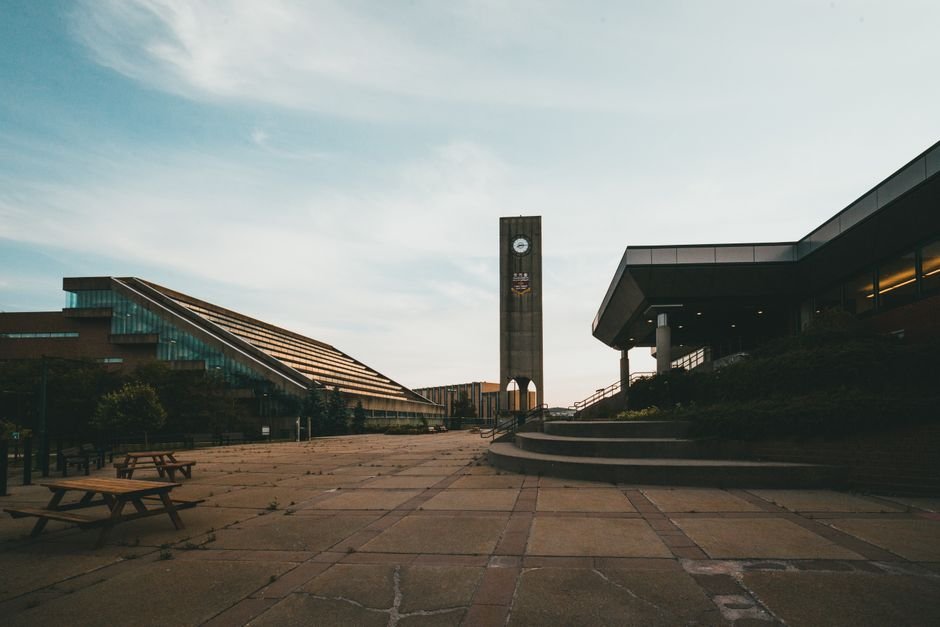
A University Campus Between Terms
There is a university about twenty minutes from my flat, and between terms its central quad is one of the emptiest outdoor spaces in the city. Not closed, not locked, just unused. Benches, mature trees, gravel paths, and for most of December and much of the summer, nobody on them.
I found this by accident, cutting through on a walk. It has become somewhere I go deliberately.
What is actually open
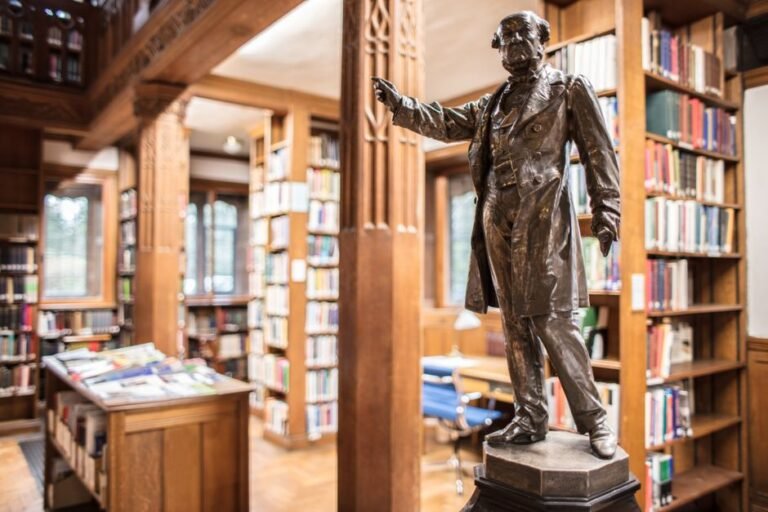
This varies enormously and it is worth checking rather than assuming. Most urban campuses keep their outdoor spaces open to the public year round, because they are effectively part of the street network. Buildings are a different question. Libraries usually restrict access to members outside term. Cafes often close entirely.
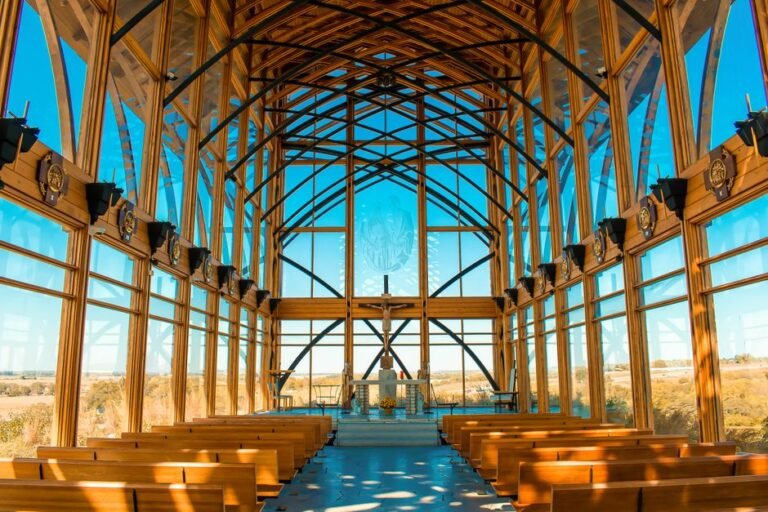
What stays open on the campus near me: the quad, the paths, the chapel, and one cafe running reduced hours for the staff who are still around. What closes: everything else.
If you are relying on a toilet or a coffee, check before you walk over. I have made that mistake in the rain.
Why it feels different from a park
A park at eight on a Sunday morning is also empty, but it is empty in an anticipatory way. Dog walkers are coming. Runners are already there. The emptiness is temporary and everyone in it knows so.
A campus between terms is empty in a settled way. The absence is going to last for weeks. There is nobody waiting for you to move off the bench. I find that produces a noticeably different quality of attention, though I would struggle to defend that claim to someone who disagreed.
There is also the architecture. Universities build for gathering, so you get benches facing each other, low walls at sitting height, covered walkways with somewhere dry to stand. Parks build for movement. When it starts raining in a park you go home. On a campus you step under a colonnade.
The etiquette question
I was uneasy about this for a while. Am I meant to be here? Is sitting in a university quad reading a book something I am allowed to do?
I asked, eventually, at the porters lodge. The answer at that particular institution was a slightly puzzled yes, the quad is a public right of way, people walk through it all day. Which suggests the anxiety was mine rather than theirs.
That said: do not go into buildings you have not established you can be in, do not sit in a departmental garden that clearly belongs to a department, and if there is a graduation or an open day happening, go somewhere else. The whole point is to use a space when nobody needs it.
Timing
Where I am, the quiet windows are mid December to early January, and mid June to late September, with a shorter gap around Easter. Term dates are published on every university website, usually under a heading like Key Dates, and they are the single most useful piece of information for this.
The first week back is worth avoiding by a wide margin.
The best spots within a campus
Once you are on one, not all of it is equally usable. The main quad is the obvious place and often the windiest, because large open rectangles between tall buildings funnel air in a way the architects apparently accepted.
What I look for now: a courtyard rather than a quad, ideally one with buildings on all four sides. These are calmer in every weather condition and they are also less overlooked, because the windows around them belong to offices that are empty in the holidays anyway.
Cloisters and colonnades are the single most useful feature. Somewhere covered, with a wall to sit against, that stays usable in rain. If a campus has one, that is where I go first and it is rarely occupied.
Science departments tend to have the least appealing outdoor space and the most reliable emptiness, because research continues through the holidays but nobody sits outside a physics building for pleasure. Arts and humanities buildings are usually prettier and slightly more used.
What I do there
Mostly read. Occasionally write, though a notebook on your knee is uncomfortable for more than half an hour and campus benches almost never have a table.
The thing I did not anticipate is that it is a good place to make a decision. Not to think in a general way, which I can do anywhere, but specifically to sit with a choice I have been avoiding. Something about being somewhere with no history for me, where I know nobody and nobody expects anything, makes it easier to be honest about what I actually want to do. I have no theory for why this is and I am slightly suspicious of the claim, but it has now happened enough times that I plan for it.
What it is bad for: anything needing power, wifi, or a toilet within five minutes. Plan for a ninety minute visit and no more, unless you have established where the facilities are.
Getting it wrong once
I turned up at a campus in early September assuming it was still the holidays, and walked into the middle of an international student welcome week. Marquees on the quad, a stage, several hundred people, and a queue for registration going round two sides of the building.
Nobody minded me being there and I left within five minutes, but it wasted an hour of the afternoon and it was entirely avoidable. Term dates are published, and so, usually, is a separate events calendar that lists open days, graduations, conferences, and welcome weeks. The second one is the more useful document, because a graduation in July will fill a campus that the term dates say is empty.
Conferences are the least predictable. Universities let their space out heavily over the summer, and a conference will occupy exactly the courtyard you were going to sit in.