City Cemeteries Are Public Space
There is a cemetery near me that covers about twenty hectares and was laid out in the 1850s. It has mature limes, gravel avenues wide enough for two carriages, and on a weekday afternoon perhaps a dozen people in the whole of it. The park half a mile away is a quarter of the size and has two hundred.
Why they are so quiet
Partly hesitation, which is understandable. Partly that they are not on the mental map of places you go. Nobody arranges to meet at a cemetery.
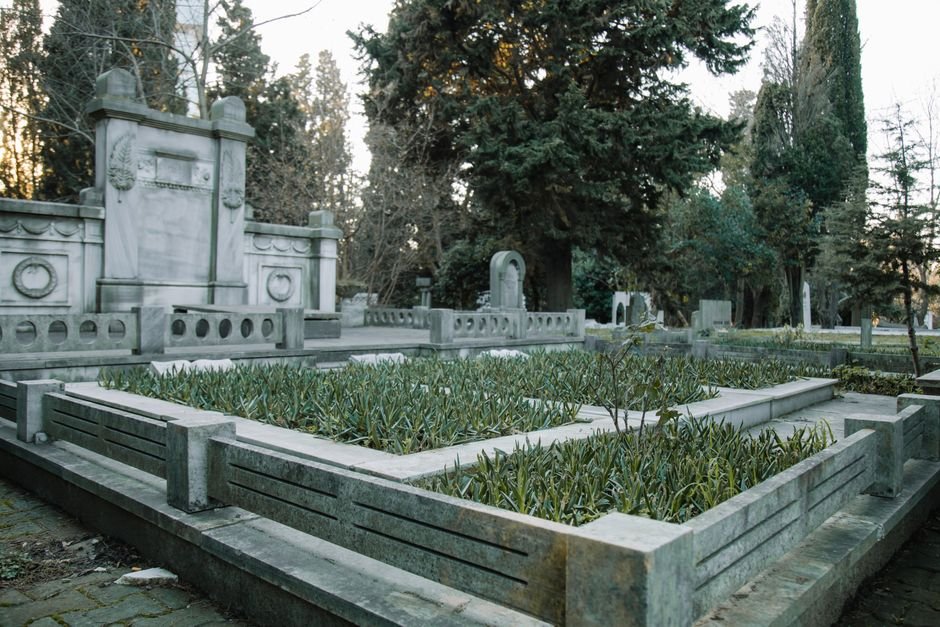
But large nineteenth century cemeteries were explicitly designed as public landscape. Before municipal parks existed in most cities, these were where people walked on a Sunday. The wide avenues, the planting, the benches, the viewpoints, all of that was intentional and aimed at the living. Many are now formally managed as nature reserves alongside their primary function.
What respectful use looks like
This is the part worth getting right, so I will be specific.
Stay on the paths. This is not only about respect, it is also about not standing on graves you cannot see because the markers have sunk.
Give a wide berth to anyone who is visiting a grave, and do not make eye contact with them. Someone tending a plot is not there to be acknowledged by a stranger.
If there is a funeral, leave. Not move away, leave. The chapel or the gates will usually make it obvious.
No picnics, no music through speakers, no exercise. Walking, sitting on a bench, and reading are all fine. Running is a grey area and I have decided against it, though I know reasonable people who differ.
What you get
Old trees, which is the main thing. Cemeteries have not been redeveloped, so the planting is often a century and a half old and much larger than anything in a park of the same era.
Birds, for the same reason. The cemetery near me has a lot more of them than the park does, and the sound is completely different because there is no competing noise.
And a particular kind of quiet that I find hard to describe without sounding morbid, which it is not. It is simply a place where nobody is in a hurry and nothing is being sold.
Practical
Check the gate times. Most lock at dusk and dusk moves fast in autumn. Getting locked in is a real possibility in the larger ones.
Many have a friends group that publishes a map. Worth having, because the avenues look alike and the older sections can be genuinely disorienting.
Which cemeteries work
The size and the era are what matter. A large cemetery laid out between roughly 1830 and 1900 will have been designed as landscape, with avenues, planting schemes, and viewpoints. It will now have very old trees and a lot of birds, and it will be big enough that you can be a long way from anyone.
A modern municipal cemetery is a different proposition. Open lawn, low markers, little planting, and much more likely to be in active use with visitors present. These are not places to go and sit. The design intent was never public amenity.
The other category worth knowing is the closed or disused burial ground, of which most old cities have several, often now managed as small parks with the headstones moved to the perimeter. These are unambiguously public space and the etiquette question largely dissolves.
Seasons
Autumn is the obvious answer and it is correct. Mature limes and planes over gravel, low sun, very few people.
But winter is the one I would defend more strongly. Bare trees mean you can see the structure of the whole layout, the avenues and the vistas that the planting hides in summer. The ground is firm. And the light at three in the afternoon in January through a line of bare limes is genuinely worth going out for.
Summer is the least good, partly because everything is overgrown and the paths narrow, and partly because the cemetery near me runs guided tours in July and August, which are excellent and also mean groups of twenty people at intervals.
The maintenance question
Many large Victorian cemeteries are in financial difficulty. The burial income that funded their upkeep ended when they filled, often a century ago, and what maintains them now is some combination of council funding and volunteers.
If you use one regularly it is worth finding out which. The friends group at mine runs monthly work parties clearing ivy and re laying paths, and after a year of walking there I started going to them occasionally. That is not a moral instruction, but the relationship between using a place and contributing to it is more direct here than almost anywhere else on this list.
Going with someone else
Almost everything above assumes you are alone, which is how I usually go. Taking someone with you changes it more than it changes a park, and not always for the worse.
Two people walking a cemetery avenue talk differently than two people walking anywhere else. The pace is slower, the pauses are longer, and nobody feels the need to fill them. I have had two or three of the more honest conversations of the last few years on those paths, and I do not think that is a coincidence. The setting gives you permission to say something serious without having to signal in advance that you are about to.
What does not work is bringing someone who has not been before and not explaining the etiquette first. The discomfort is real for most people on a first visit and it is much easier to handle if it has been named. I now say something on the way in, briefly, and it removes the awkwardness almost entirely.