The Atrium Nobody Uses
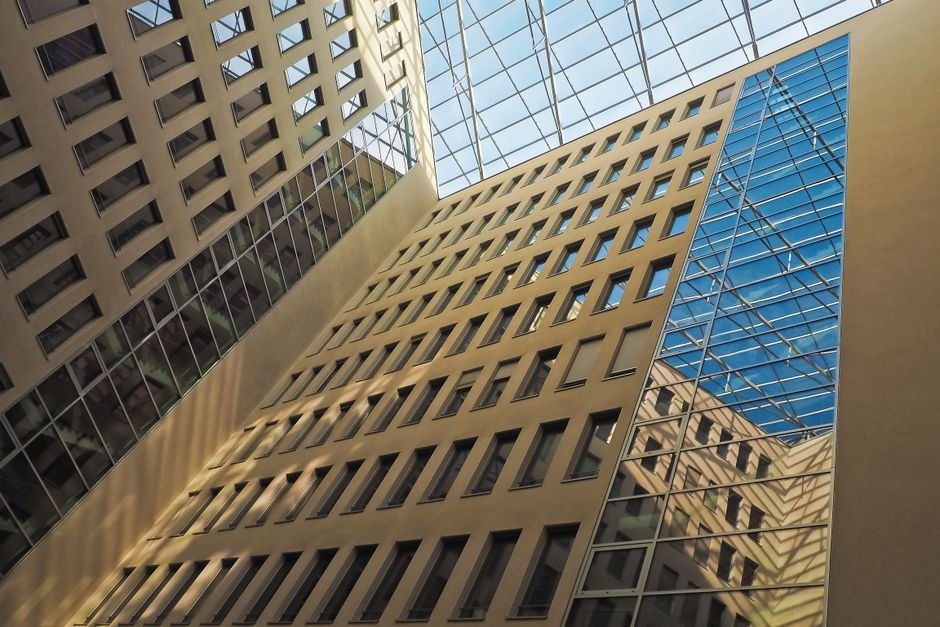
Between two office towers near the station there is a covered atrium with tables, chairs, planting, and a sign at the entrance that says the space is open to the public between seven and seven. At two on a Wednesday afternoon there were four people in a space with seating for perhaps eighty.
I had walked past it for two years assuming it was a lobby.
Why these exist
In a lot of cities, large commercial developments get planning permission partly by providing publicly accessible space. The building gets its height or its density, the public gets a plaza, an atrium, a roof terrace, or a passage. The obligation is real and usually comes with published access hours.
What it does not come with is any effort to tell people. The signage is typically a small plaque near the entrance. The space looks corporate because it is inside a corporate building. So people assume, as I did, that walking in would be a mistake.
How to tell whether you can go in
Look for a sign near the entrance stating public access hours. That is the giveaway and it is legally required in many places.
Failing that, ask the desk. I have done this maybe eight times now and the answer has always been a straightforward yes, sometimes with directions to the better seating.
Some cities publish maps of these spaces. It is worth searching for the name of your city alongside terms like public space map or privately owned public space, because the useful listings tend to be maintained by planning departments or local architecture groups rather than being obvious.
What they are like
Mixed, honestly. The best are genuinely good: warm in winter, sheltered, decent chairs, plants, and near empty outside of lunchtime. I have spent whole rainy afternoons in one.
The worst are hostile in a way that is clearly deliberate. Bench dividers, seating angled so you cannot lean back, background music at a volume that makes reading difficult, no toilets. These technically satisfy the obligation while making sure you do not stay.
You can usually tell within thirty seconds which kind you are in.
The lunchtime problem
Between twelve and two these spaces fill with the people who work in the building, which is entirely fair and also means they are useless for an hour and a half in the middle of the day.
Before eleven and after three is when they are empty. That is an awkward window if you have a job, and it is the main limitation of the whole category.
Roof terraces
The best of these spaces I have used is a roof garden on top of a shopping and office development, six floors up, open to the public, free, with seating and a view over the whole city. It requires booking a slot at busy times and none at all on a weekday morning.
Roof terraces are the category most worth actively hunting for, because the planning obligation that produced them tends to attach to the largest and best funded developments, which means better maintenance and better seating. They are also the least discovered, because getting to them requires going up through a building rather than walking past an entrance.
The catch is weather. A roof terrace in wind or rain is unusable, and many close entirely in bad conditions with no notice.
Reading the hostility
I mentioned that some of these spaces are designed to discourage staying. It is worth learning to read the signals quickly, because it saves you settling in somewhere that will make you uncomfortable in twenty minutes without your being able to say why.
The reliable tells: seating with fixed armrests at intervals, backless benches, seats angled forward by a few degrees, no seating at all in the sunniest spot, music played at conversational volume, and security staff who make eye contact rather than ignoring you. Any two of those together and I move on.
The positive signals are equally clear. Chairs you can move. Tables. A toilet you do not need to ask for. Planting that has been maintained rather than installed and abandoned. Somewhere that has all four is somewhere the developer actually meant it.
Whether this counts as public space
There is a real argument that these places are a poor substitute for genuine public space, because access is conditional, the rules are set privately, and permission can be withdrawn. I think that argument is correct as a matter of policy.
It does not change the practical position, which is that the atrium exists, it is warm, it is empty at three on a Wednesday, and the sign on the door says I may go in. I use them and I would also vote for more parks.
Winter
This is when these spaces earn their place. Every other option on my list is either outdoors or has restricted hours, and in January an indoor atrium that is warm, free, open until seven, and empty at four in the afternoon has no real competitor.
The good ones get noticeably busier from November, but busier in an atrium built for two hundred people still means you have a table to yourself. It remains the most reliable weather independent option I have found, and the one I would recommend first to someone who has to make this work in a cold city.
One practical note: they are usually heated for people walking through in coats, not for people sitting still in shirtsleeves. It is often cooler than it looks.