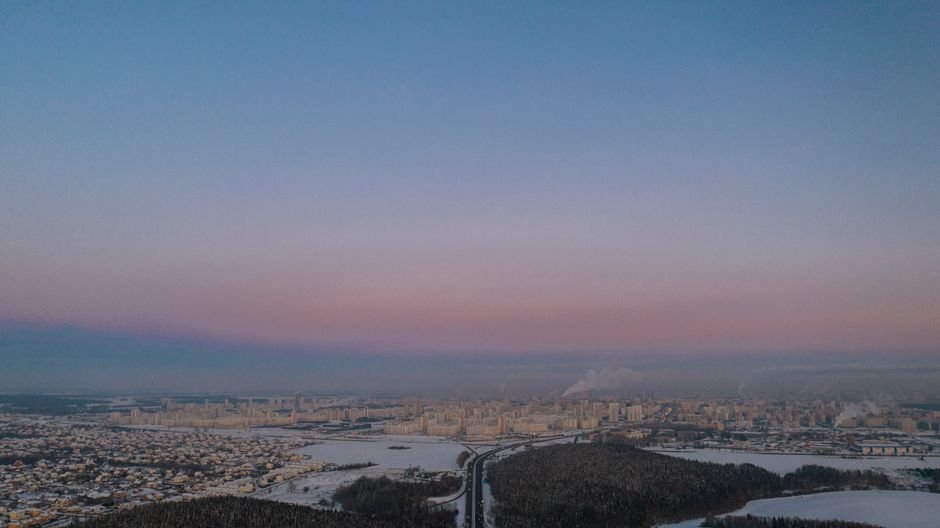
Summer Mornings and Winter Mornings Are Not the Same Activity
I have kept some version of an early morning habit for about three years, and the single most useful thing I have learned is that summer early and winter early are two different practices that happen to share a name.
Treating them as the same thing is why most attempts at this collapse in November.
Summer: easy to do, harder to use
Getting up at five in June requires very little. It is light, it is warm, the body cooperates, and stepping outside is immediately pleasant.
The problem is that everyone else finds it easy too. The park fills by half five. The streets have people on them. Sunrise is at an hour so early that watching it means genuinely losing sleep rather than shifting it. And the window between too dark and too busy is at its narrowest of the entire year.
So summer gives you an easy start and a poor payoff. What it is good for is distance. If the point of your morning is a long walk or a run, June is obviously the month, because you can go for two hours in comfort and be back before the day starts.
Winter: hard to start, much better once you are out
Everything about beginning is worse. It is dark, it is cold, and the gap between deciding to go and actually being outside is where most attempts die. I have lost entire Decembers to that gap.
But the reward is disproportionate. Nobody is out. Sunrise happens at a civilised hour, so you can see it without heroics. The light between eight and nine in January is the best light of the year in a city, low and long and coming down streets rather than over them. And the cold does something to the quiet that I cannot explain but which is consistent: cold air carries sound differently and a frozen park at half eight is more silent than the same park in July at five.
The practical fix for the starting problem is entirely mechanical. Clothes laid out the night before, in the order you put them on. That single thing has done more for my winter mornings than any amount of resolve.
The shoulder seasons are the actual best
If I could only keep one, it would be October, and second would be late March.
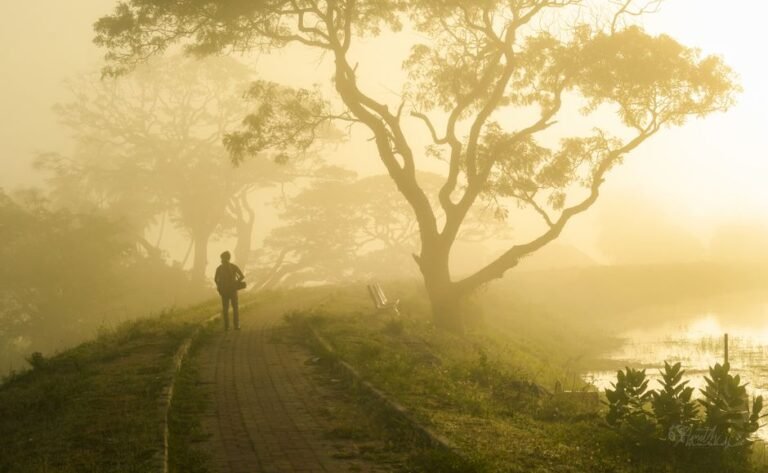
In October sunrise is around seven, which is early enough that the city is quiet and late enough that you are not destroying your sleep. It is cold enough for mist and not cold enough to be unpleasant. The trees are doing the most interesting thing they do all year. And crucially, most people have already given up their summer early habits by then, so the parks and paths that were busy in June are noticeably emptier.
Late March is the same trade in reverse, with the addition of the dawn chorus, which peaks in April and May and is genuinely one of the better free experiences available in a city.
What I would tell someone starting
Do not start in June, even though it is the obvious month. It is too easy, which means you will not build any of the machinery you need, and then November will end it.
Start in late September or early October. It is hard enough to require the preparation, easy enough that you will actually go, and the payoff is high enough to establish that the whole thing is worth it before the difficult part of the year arrives.
And accept in advance that you will lose most of January. Everybody does. Treating that as a failure is what stops people restarting in February, which is when it becomes possible again.
The clothing problem
This sounds trivial and it is the single most common reason a winter attempt fails on the third or fourth outing.
Standing or walking slowly in the cold is a completely different thermal problem from walking briskly, and most people dress for the second. Twenty minutes into a slow walk at two degrees you are cold, and being cold ends the morning regardless of how good the light is.
What worked for me: dress as though it is five degrees colder than it is, take gloves you can actually do things in, and treat a hat as non optional below about six degrees. A flask is worth the bulk. And boots rather than trainers, because wet feet at seven in the morning will make you go home.
In summer the equivalent mistake is dressing for the middle of the day. At five in June it is often ten or eleven degrees and genuinely cool, and I have been caught out in a t shirt more than once by the fact that it was going to be twenty six by lunchtime.
Light, specifically
The reason I keep coming back to autumn and winter is worth stating precisely rather than gesturing at.
In June the sun comes up almost vertically and quickly, and within twenty minutes it is simply daytime. In December it comes up at a shallow angle and takes over an hour to do it, and for the whole of that hour the light is coming horizontally down streets and between buildings and through bare trees.
That long low light is the thing. It is why photographers care about that hour, and it is available for an extended period in winter and for about fifteen minutes in summer. If the visual part of this matters to you at all, that fact alone should determine which months you prioritise.