The Back of a Secondhand Bookshop
There is a secondhand shop three streets from here on two floors, with the upper floor reached by a staircase so narrow you have to turn sideways. At the top, past the local history and the sheet music, there is an armchair by a window.
The chair is clearly there for a reason. Nobody has ever suggested I should not use it.
What distinguishes a sitting bookshop
Most bookshops are not this. A new bookshop is a retail environment optimised for turnover, and even the ones with a cafe are selling you the cafe. The chair by the window in a chain bookshop is real but it is surrounded by commerce.
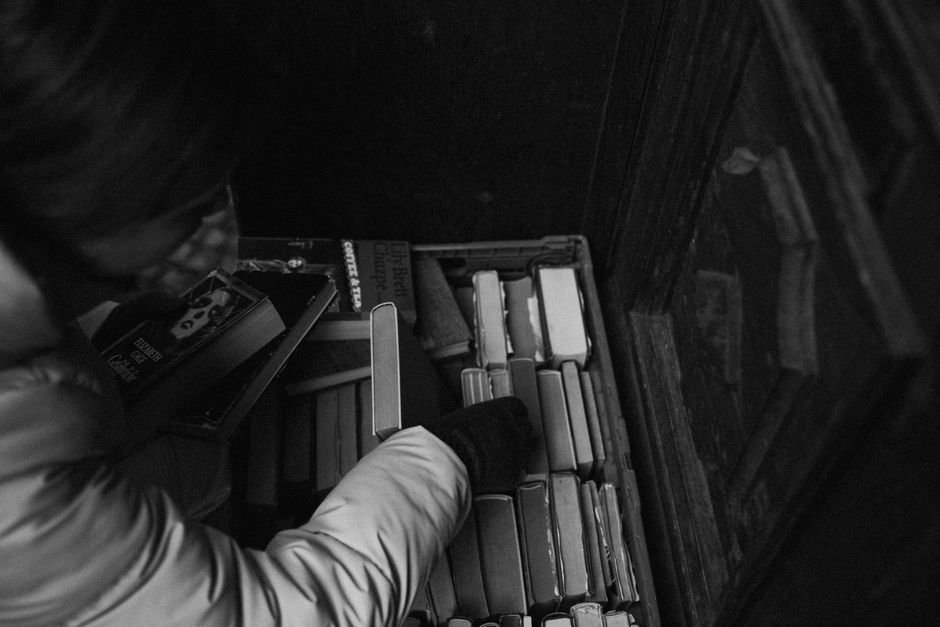
The shops that work are secondhand, usually family run or owner run, usually with more stock than space, and almost always with an upstairs or a back room where the slow moving categories live. Theology. Local history. Old travel guides. Nobody comes to those shelves in a hurry, which is why there is a chair there.
The signal I look for is whether the seating faces a window or faces the shelves. Facing shelves means it is for browsing. Facing a window means the owner expects someone to sit in it for a while.
The transaction
You should buy something, and I want to be direct about that rather than clever.
These shops operate on margins that are difficult to describe as a business. The owner is subsidising your armchair with their afternoon. Sitting there for an hour every week and buying nothing is not a neutral act, however welcome you are made to feel.
I have settled on buying a book roughly every second or third visit, which at secondhand prices is genuinely cheap and which I would be doing anyway. It also has the effect of making me feel entitled to the chair, which changes the experience more than the money does.
The conversation risk
This is the main failure mode and it is worth going in aware of it.
The people who run these shops are often there alone all day and some of them would like to talk. That is entirely reasonable and it is also directly opposed to what you came for. I have been in shops where I got twenty minutes of conversation about the stock before I could sit down, and while it was interesting, it was not restful.
What works: a brief exchange on the way in, so you are not being rude, then going upstairs. The physical separation does the rest. Shops with everything on one floor are much harder in this respect, which is another reason the two floor ones are better.
Hours and reliability
The unreliability is the real problem with this category. Small secondhand shops open when the owner opens them. Published hours are aspirational. I have walked to one three times in a row and found it shut with no note.
Afternoons are safer than mornings. Tuesday to Friday is safer than Monday or Saturday. And if you find one that is reliably open, it is worth becoming a regular there rather than optimising for the nicest chair, because a good chair in a shop that is shut is worth nothing.
They are also disappearing, which makes the buying something point more than a courtesy. Two of the four I used five years ago have closed.
What I read there
Almost never the book I brought. That was the discovery.
Sitting in a room containing four thousand books, reading the one you carried in, is a slightly absurd thing to do and I stopped after a few visits. Now I pick something off the shelf nearest the chair, read forty pages, and either buy it or put it back.
The shelf nearest the chair in my shop is local history, which I had no interest in whatsoever and now know an unreasonable amount about. There is a case for arranging your reading by whatever happens to be within arm reach of a comfortable chair, and it has been more productive than any list I have ever made.
Light and heat
The practical qualities vary hugely and are worth checking before you commit to a shop as a regular.
Heating is the big one. Secondhand bookshops are frequently cold, because heating a two floor building full of paper is expensive and the owner is wearing a coat too. A shop that is pleasant in September can be unusable in January.
Light matters almost as much. Many of these shops are dim, which is atmospheric and makes reading for an hour genuinely tiring. A chair by a window is not a luxury, it is the difference between an hour and twenty minutes.
When it is busy
Saturdays, obviously. But also the first properly wet day after a dry spell, which fills every bookshop in the city with people who came in to get out of the rain.
The upstairs rooms stay quiet even then, which is the advantage of the categories nobody wants. I have sat in theology on a wet Saturday with a full shop below me and heard nothing but the floorboards.