When Not to Go
The whole premise here is using spaces at the times nobody else needs them. That works because it takes nothing from anyone. It stops working the moment somebody else does need the space, and recognising those moments is most of the etiquette.
When somebody is grieving
The clearest case. A funeral at a church, a burial in a cemetery, someone tending a grave, someone sitting alone in a hospital chapel.
Leave, and leave properly rather than moving to the other side. In a cemetery this means going a different way entirely. At a church, do not go in at all, even if the service is in a side chapel and the churchyard is technically separate.
This is not a close call and there is no version of your afternoon that outweighs it.
When a place is in use for its purpose
A community garden on a work day. A university quad during graduation. A prayer room at prayer time. A reading room during a booked session.
These places have a primary function and your use of them is secondary by definition. When the primary function is happening, the secondary use is in the way, however quietly you do it.
The good version of this is to find out when those times are and build them into your list, so the decision is made in advance rather than at the gate.
When you are the fourth person
A rule I made up and have found reliable. In a small space, one person is solitude, two is coincidence, three is a situation, and four is a crowd.
If I arrive at a small garden with three people already in it, I do not go in. Not because anyone would mind, but because at that density everyone is aware of everyone, and the thing I came for has already stopped being available.
Better to have a second option twelve minutes away than to convert someone else quiet afternoon into a slightly crowded one.
When you have brought the wrong mood
Harder to state without sounding precious, and it has cost me several afternoons.
There are days when I go out specifically to stop being irritable, and arrive irritable, and then find that the church bell, the man on the phone, and the family with the football are all personally aimed at me. On those days the quiet does not work and I would have been better off going for a hard walk somewhere I did not care about.
The signal is being annoyed at people for existing in public. When I notice that, the useful move is to go home rather than to try three more places.
When it is not yours to use
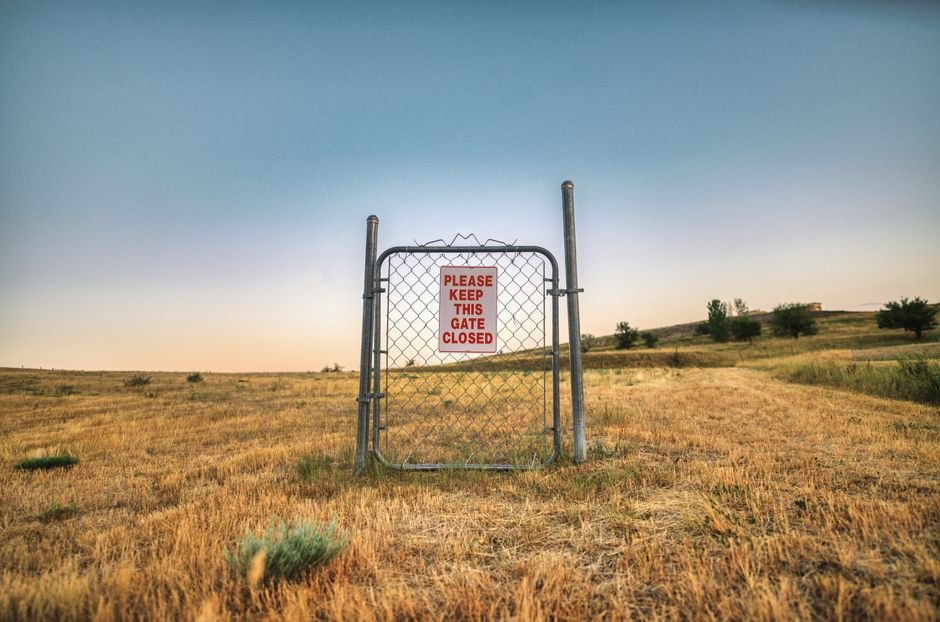
The distinction I keep coming back to. There is a real difference between a space that is open and a space you have not been told to leave.
An allotment is not a garden you may sit in because the gate was open. A residential courtyard is not public because you can walk into it. A hotel lobby is for guests, whatever the seating suggests.
The test I use is whether I would be comfortable being asked what I am doing there and answering honestly. If the honest answer is that I am using somewhere I know is not for me, that is the end of it.
When the weather says no
Mildly and practically. There is a real cost to going out in conditions that will make you cold and wet with nowhere to shelter, and it is not toughness to do it anyway.
The failure is not the discomfort, it is that a bad outing makes the next one less likely. Two miserable February walks in a row is how a habit ends. Skipping one is how it survives to March.
When a place has been discovered
A slower version of the same problem and one with no good answer.
Two of the places on my list have become popular in the last three years, one because of a newspaper piece and one for no reason I could identify. Both went from reliably empty to reliably occupied inside a few months.
There is a temptation to resent this and it is worth resisting, because the resentment is based on nothing. Nobody has taken anything from you. A place that was public and quiet is now public and busy, and the correct response is to take it off the list.
The related discipline is not to be the cause. I have written about categories of place throughout this site and named almost none of them, and that is why.
When you are going out of obligation
A quieter failure mode. Once this becomes a habit, it acquires the character of a habit, which means there are mornings when I go because it is Wednesday rather than because I want to.
Those outings are flat. Nothing is wrong with them and nothing happens either. The hour passes and I come back having got very little from it.
I do not think this is avoidable and I no longer treat it as a problem to fix. It is the price of the thing being regular, and the regular version delivers far more over a year than a purely spontaneous version ever did. But it is worth knowing that a flat one is not a sign that the whole practice has stopped working.
The general rule
Everything above reduces to one question, which is whether your being there costs anyone anything.
In an empty churchyard at ten on a Tuesday it costs nobody anything at all, which is why the whole enterprise is defensible. At a funeral, in a garden on a work day, as the fourth person in a small space, it does, and no amount of being quiet about it changes the arithmetic.
Asking that question at the gate rather than after sitting down has never once led me wrong.