Glasshouses in Winter
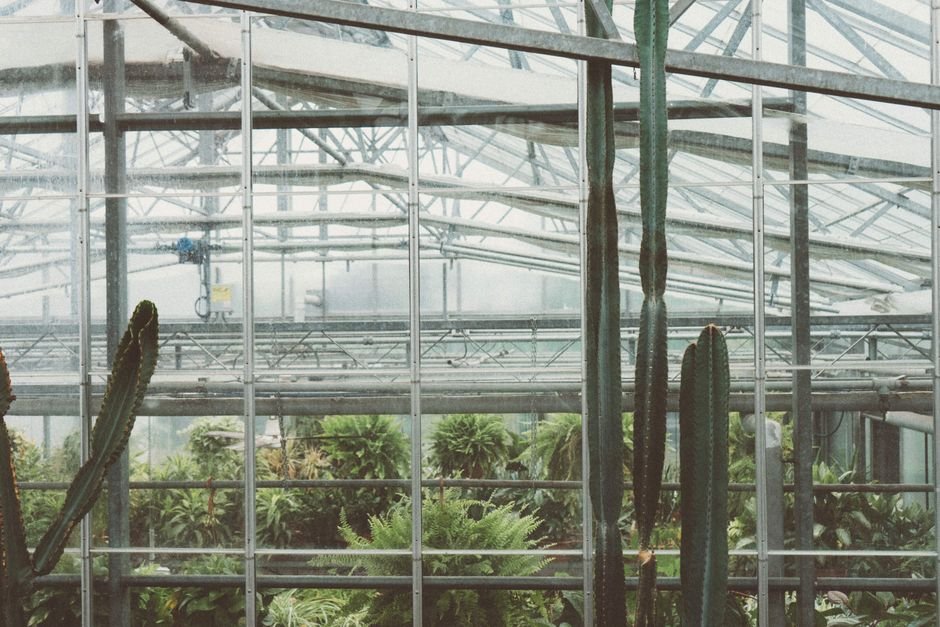
The botanic garden here has three linked glasshouses. The largest is a palm house from the 1890s with a spiral stair up to a walkway. In August it is full. In February, on a wet Tuesday, I have been the only person in it.
It is warm, it is twenty degrees more humid than outside, it smells strongly of soil, and there is a bench at the far end past the ferns.
Why winter is the season
Because everyone else goes in summer, and because the contrast is what makes it worth doing.
Walking into a palm house in July from a warm garden is pleasant. Walking into one in February from horizontal rain is something else, and the shift in temperature and humidity as you go through the door is physical enough to be startling every time.
The gardens themselves are also empty in winter, which means the walk in is quiet and there is no queue, and many botanic gardens reduce their entry price out of season or drop it entirely.
The practical qualities
Warm, which no other option on my list reliably is. Free of wind and rain. Bright even on a dark day, because the whole building is glass. And loud in a way that turns out not to matter: the ventilation fans and the water produce a constant background that masks everything else, so two people talking at the other end of the house are inaudible.
That last point is why glasshouses work better than an ordinary museum room for me. In a gallery a single voice cuts through. In a palm house it does not reach you at all.
The seating is the weak point. Most have very little of it, often one or two benches for a large building, and they are frequently damp. I have taken to carrying a folded plastic bag for exactly this, which is not elegant and works.
Which ones
Botanic gardens attached to universities are usually the quietest and the cheapest, and they are often free to enter. They are also usually smaller, with less spectacular buildings and fewer visitors, which is the trade I want.
Major public botanic gardens have better glasshouses and more people in them, though on a February weekday the difference narrows a lot.
Municipal park glasshouses are the overlooked category. A number of city parks have a Victorian conservatory that has survived, often free, often barely visited, and sometimes in a state of gentle decline that I find more appealing than a restored one. There is one about twenty minutes from me with peeling paint, three benches, and a smell of wet earth that I would not trade for a better maintained building.
Timing within the day
Opening time is not the answer here, which is unusual. Glasshouses take a while to warm through on a cold morning and the first hour can be cooler than you want.
Mid afternoon is better, particularly in the hour before closing when the light through the glass goes orange and the staff have started their rounds elsewhere. Winter closing is often four or half four, so this is a short and specific window, and it is the one I aim for.
School holidays and half terms fill them completely, because a warm indoor space with plants is an obvious solution to a wet day with children. Check the dates.
The reading problem
Humidity and paper do not get on. An hour in a palm house will leave a paperback noticeably softer than it went in, and a hardback with a dust jacket will start to lift at the corners.
I stopped bringing anything I cared about and now take charity shop paperbacks I do not mind damaging, which has had the side effect of making me read more randomly than I otherwise would.
Phones and cameras also fog badly for the first few minutes after you go in, and if you take a cold lens into a warm humid house it will condense and stay condensed for a quarter of an hour.
The temperate house is the better room
Most botanic gardens have a hot house and a temperate house, and the hot one gets all the attention because it has the palms and the big leaves.
The temperate house is usually quieter, more comfortable to sit in for an hour, and better lit. Twenty two degrees and moderate humidity is a room you can stay in. Thirty degrees and saturated air is somewhere you visit for fifteen minutes and then need to leave.
The alpine house, where there is one, is the extreme version of this. Cold, dry, bright, full of small plants nobody stops to look at, and in my experience entirely empty every single time.
Cost and membership
University botanic gardens are often free or a few pounds. Major public gardens are not, and a single winter visit can be expensive enough to make you feel you should get your money worth, which is precisely the wrong frame of mind to arrive in.
An annual membership changes that completely. It converts every visit into something you can leave after twenty minutes without any sense of waste, and that freedom is worth more than the money saved.